Different stake holders · COMPLEX SYSTEMS · CUSTOMER SUPPORT
AI for rental disputes: from bill self-service to support tasks
PROJECT OVERVIEW
Less should reach support.
What does should be easier to close.
Domain
OTA car rental
Status
3 shipped · 1 pending launch
ROLE
Owner · UX/UI + Research
I owned end‑to‑end UX/UI for complex systems and led supporting design research. I built client‑facing bill self‑service and structured merchant dispute workflows that intercept routine requests prior to customer‑service escalation. Internally, I designed email and contract AI tools to reduce agent reading efforts and improve task throughput. The AI task‑parsing assistant retains context and standardizes processes across task holds and cross‑agent handoffs, refining the overall UX loop.
SCOPE
Customer · Merchant · Customer Support
ONE DISPUTE
A €120 fee that would not stay in one channel
REPRESENTATIVE CASE
"Why was I charged an additional €120 after returning the car?"

The charge showed up at the bank
Offline fees do not appear in order detail. Customers notice them on the statement after return.
The closing bill lived outside the app
People used to contact support just so an agent could look up the rental company’s final bill.
The rental company had the facts
Pickup and return details still required confirmation outside the product.
Holds and handoffs broke the thread
If it still reached support, phone, IM and email did not carry the work already done across task holds and agent changes.
DESIGN STRATEGY
Resolve at the simplest capable level
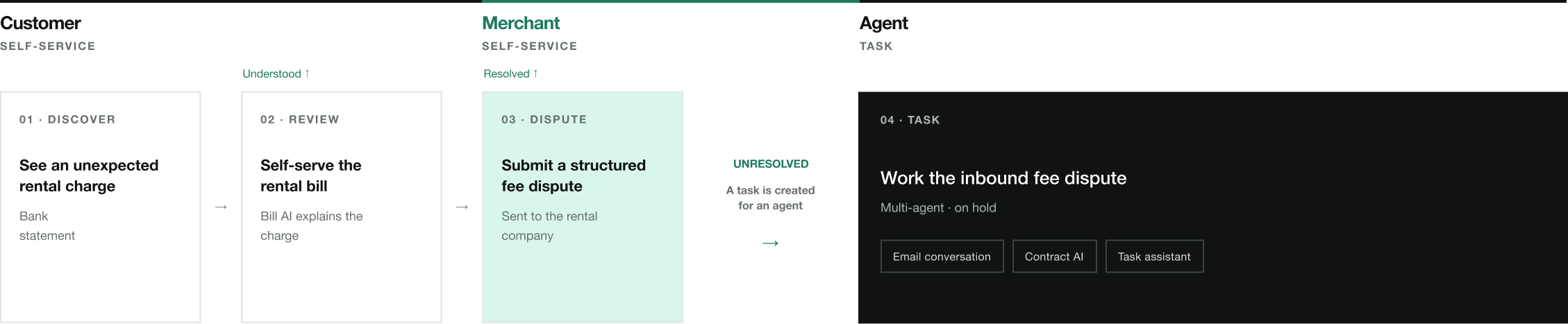
Not every dispute should reach an agent. The bill and the rental company come first; if they cannot finish, a task opens and the agent works it with email, contract AI and a task assistant.
BEFORE THE QUEUE
Keep simple disputes out of customer support
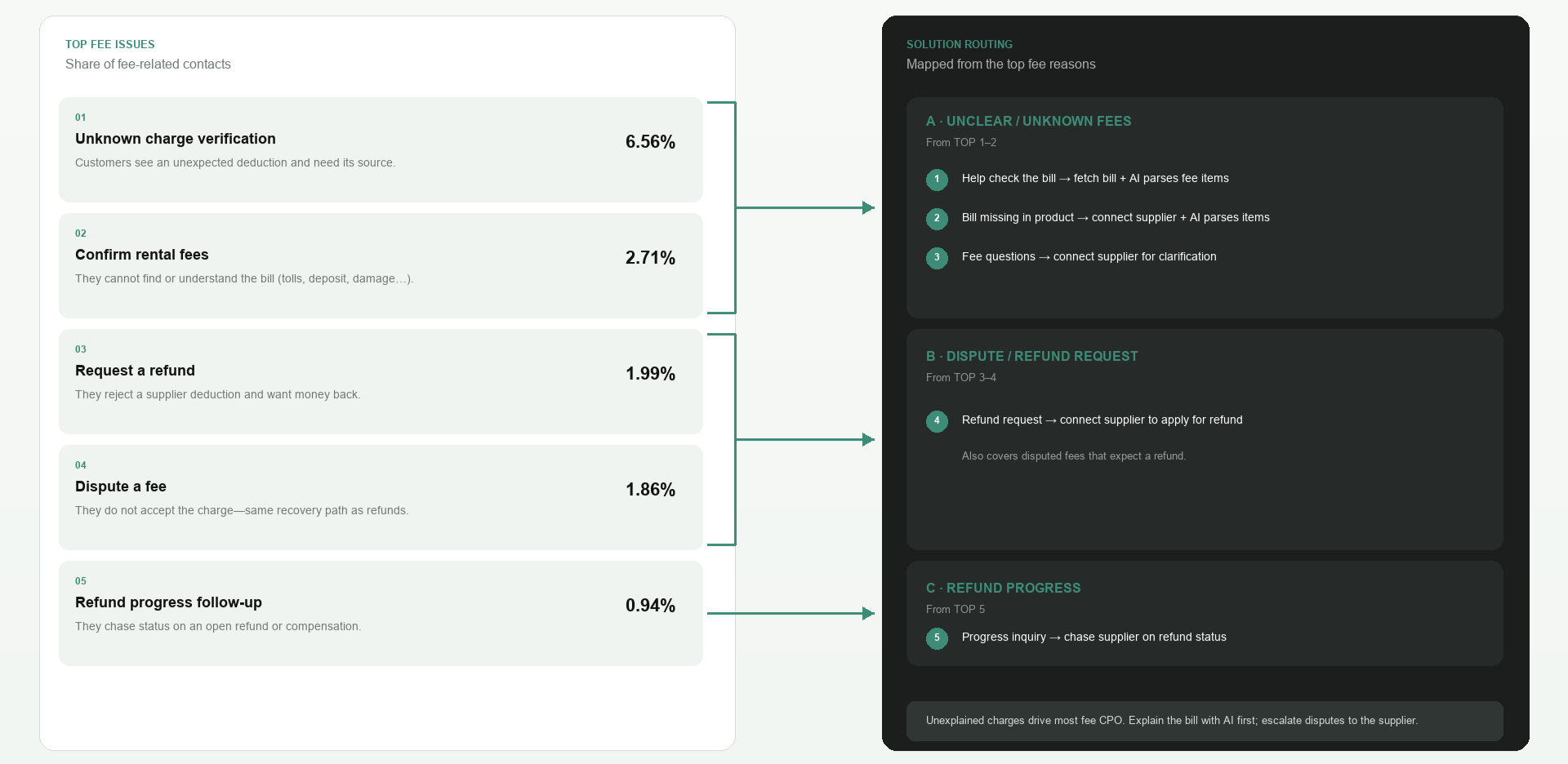
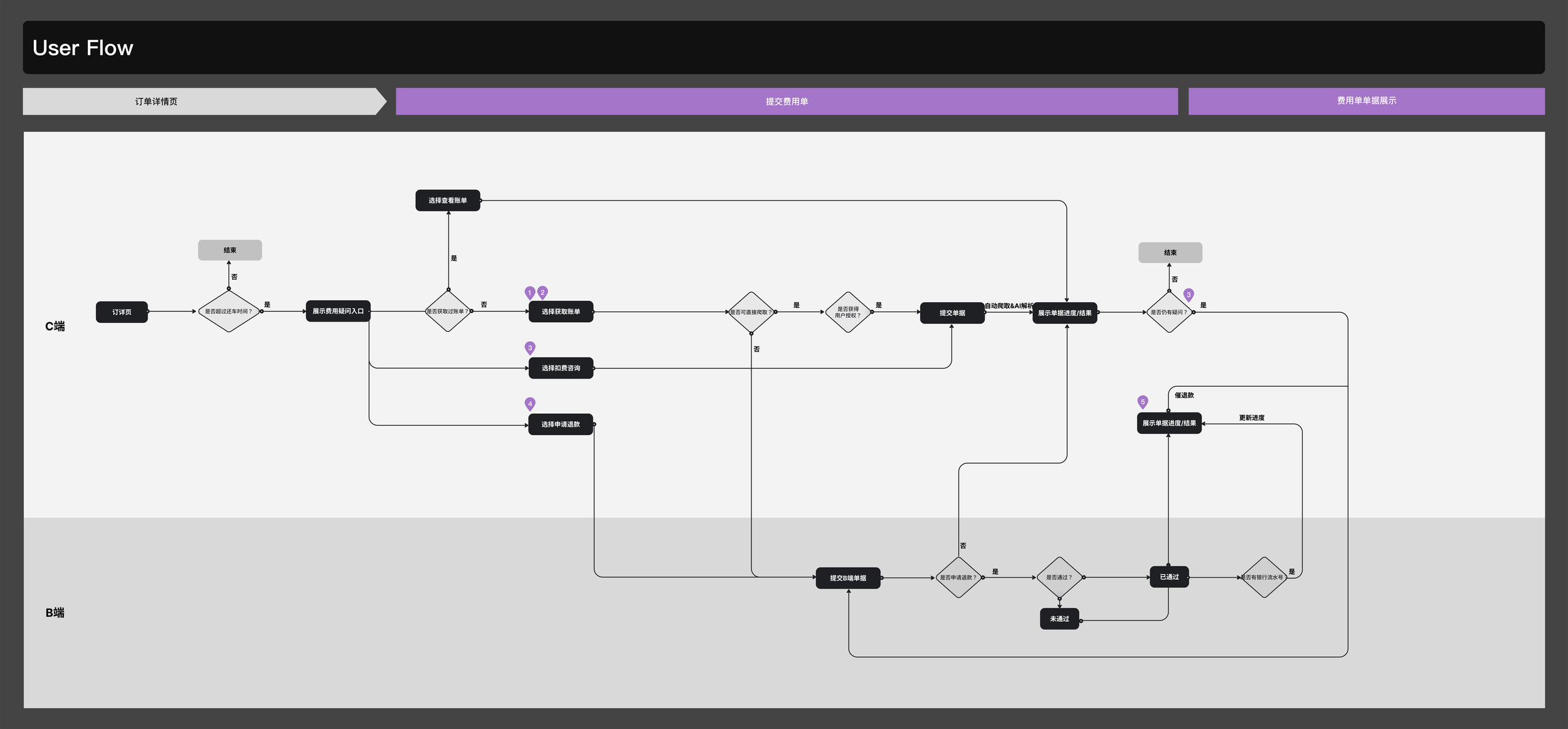
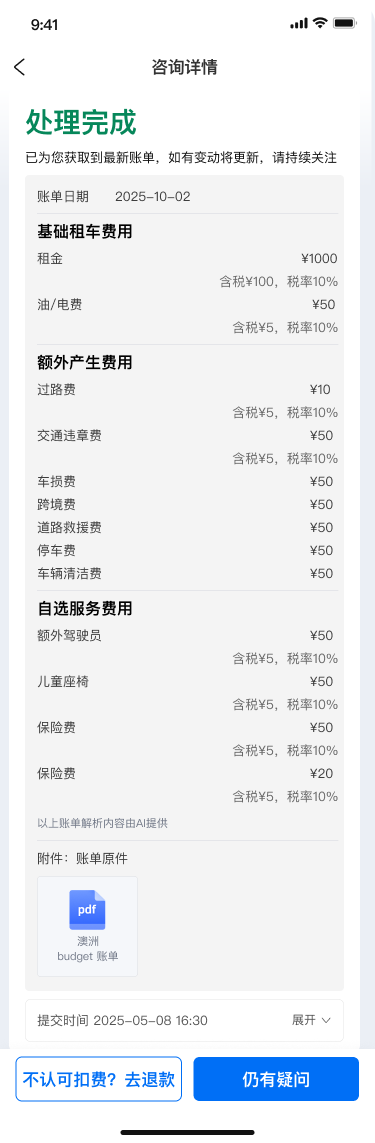
CUSTOMER SUPPORT · RESEARCH
How agents actually work a fee-dispute task, usually takes months
01
Contract/Bill double check is the first step for handling fee-dispute
Documentation check is not difficult but highly repetitive, and the workload is big.
02
The email is the whole conversation
Customer, rental company, auto-replies and handoffs sit in one thread. About half of the volume is noise.
03
Holds and handoffs break the SOP
The next agent has to take time reconstructing intent, emotion and what is already done before they can move.
SOP is not easily followed across long task period.


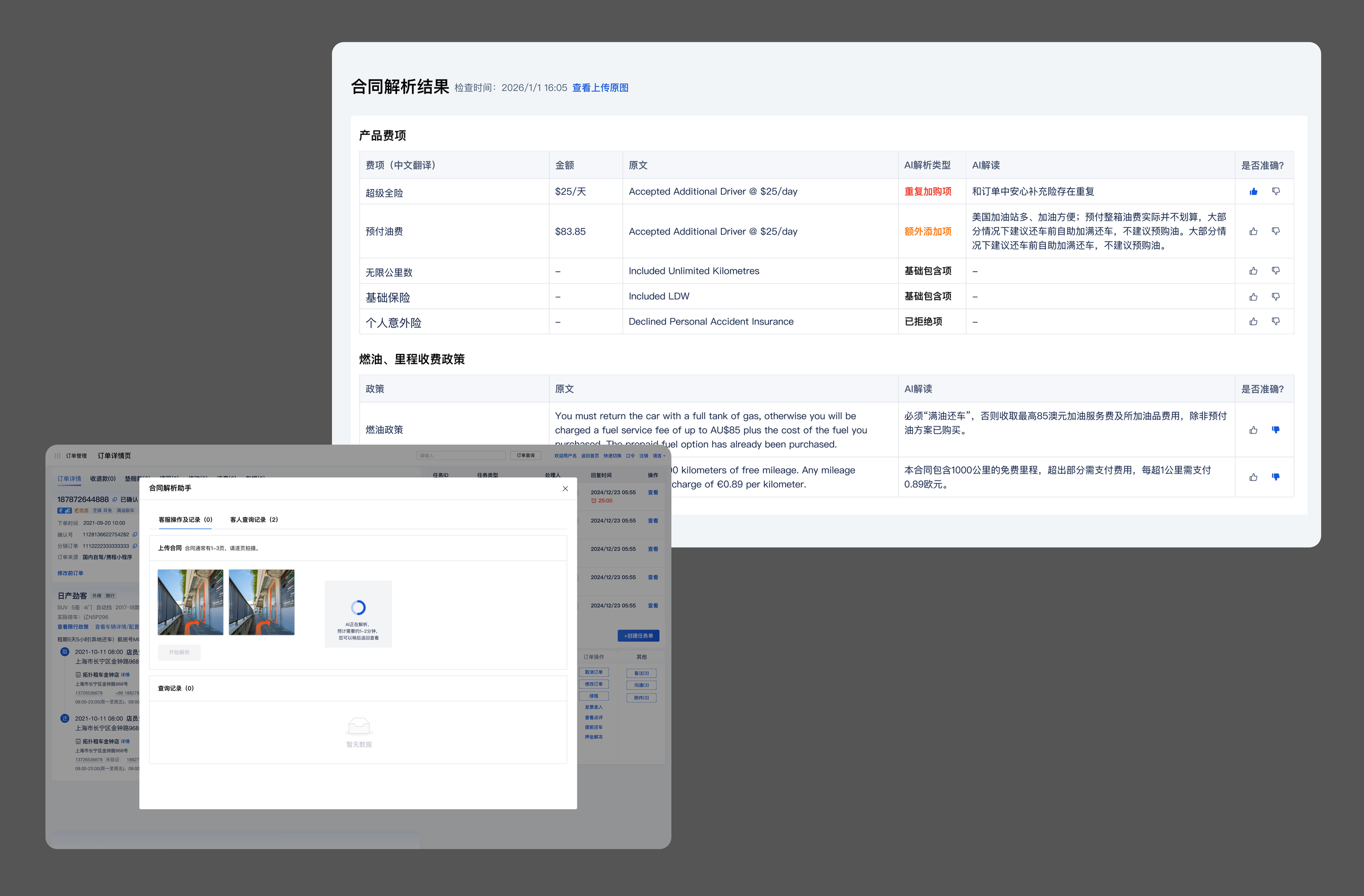
01 AI contract analysis for less workload
Use AI power to reduce repetitive reading efforts
Help service support quickly find the key information they usually need to recognize from documentation based on 3-level risks leading to fee disputes:
High Duplicated Add‑on Items → need to reject
Medium Extra Add‑on Items → need to confirm
Low Included Items|Rejected Items|Fee Policy
02 Email optimization for lower efforts
BEFORE
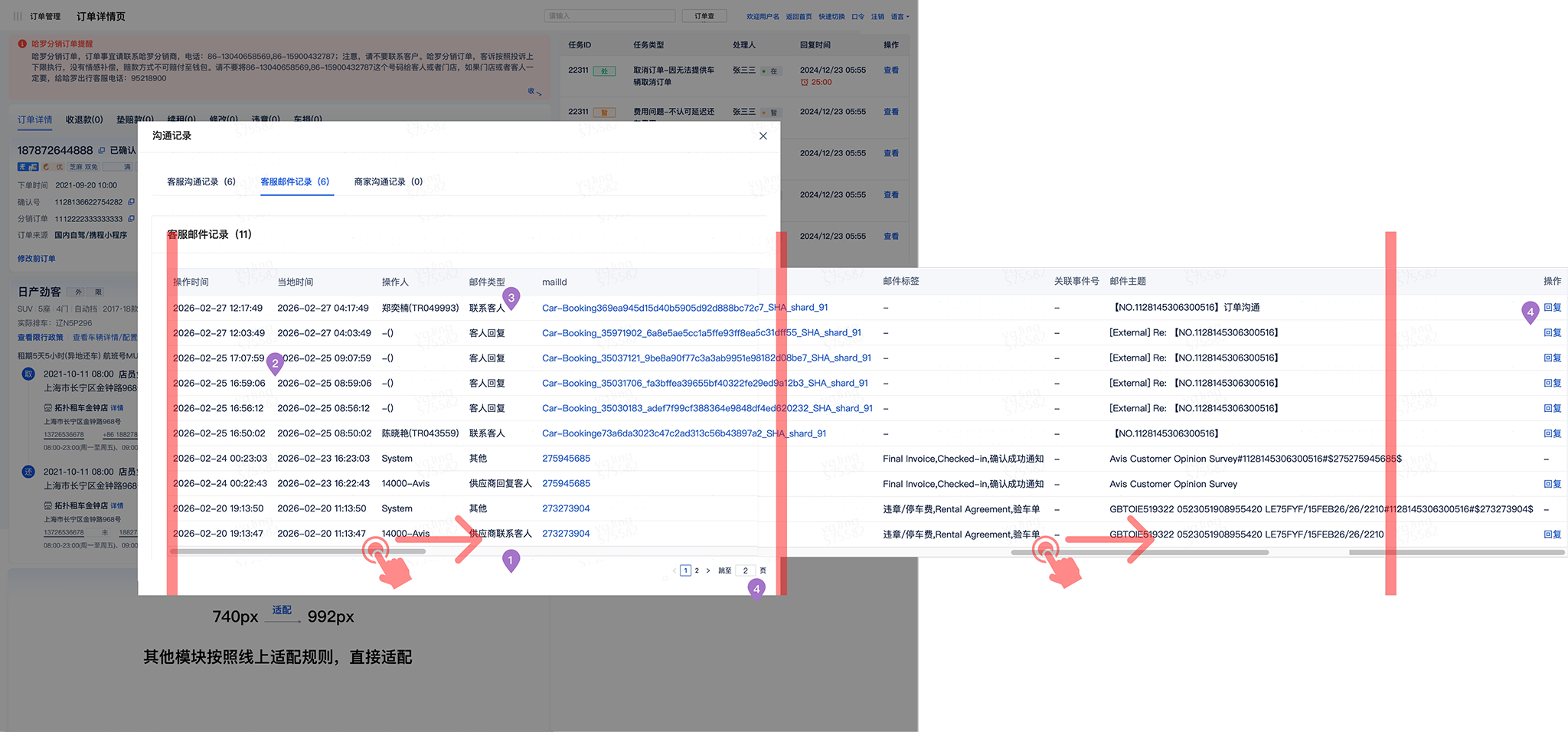
Wrong reading order
Columns ignore how agents scan a thread
Ambiguous direction
Merchant, guest and auto-replies look alike
Lost context
Long threads force hunting to rebuild the case
From user research & heuristic evaluation
AFTER
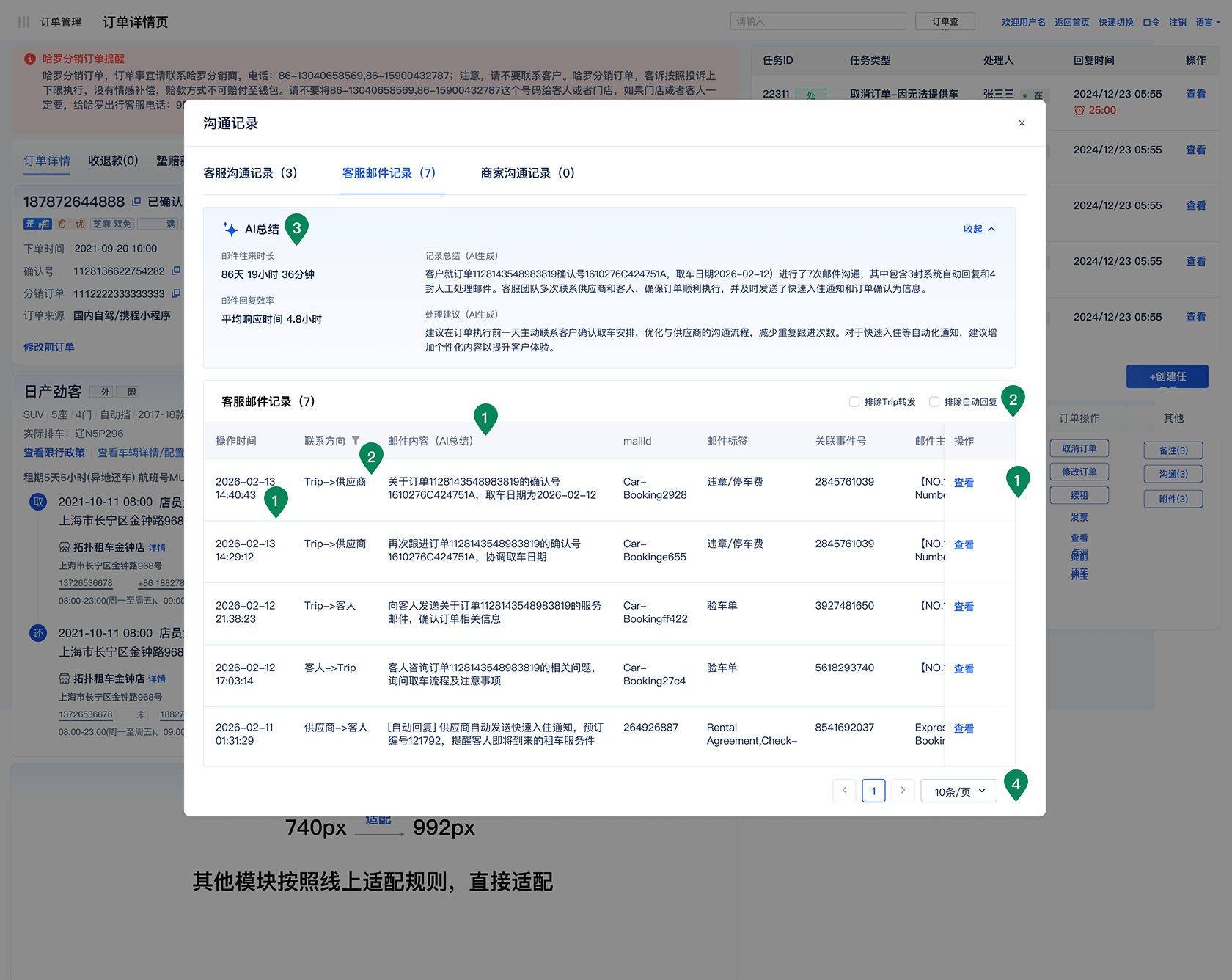
01 Reading-priority layout
Reorder columns by how agents scan; keep actions sticky and visible.
02 Clear direction + filters
Label sender/receiver clearly; mark and filter auto-replies to cut noise.
03 AI restore the case
Case summary and next-step suggestion replace re-reading weeks of mail.
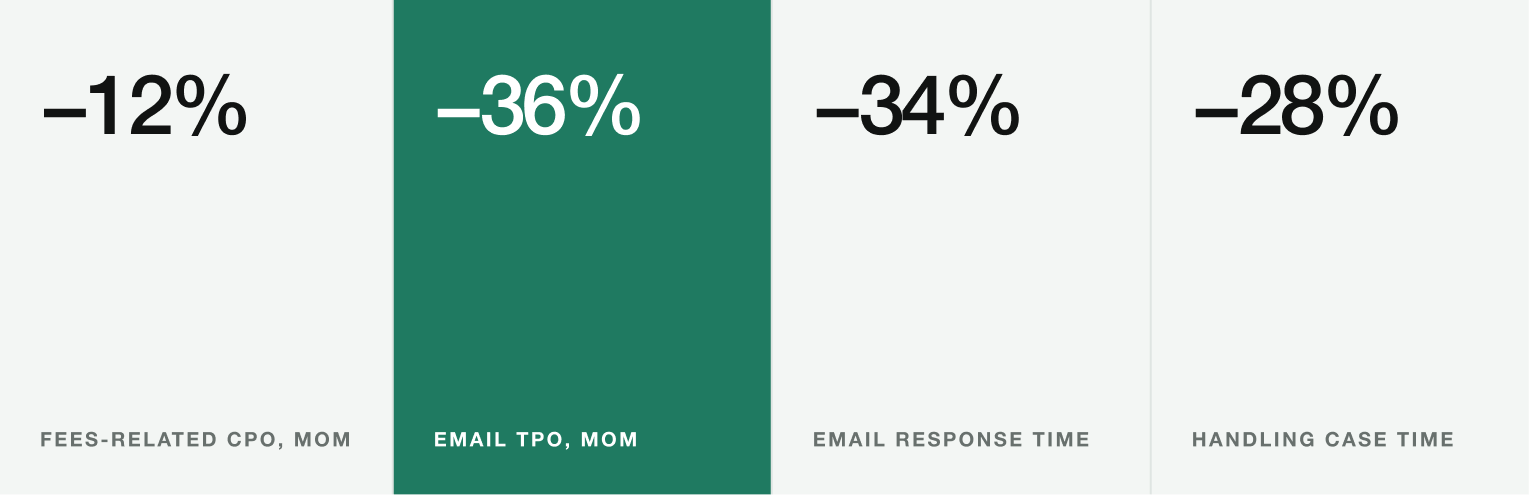
-36%
Email TPO, MOM
-34%
Email Response Time
WHAT’S NEXT
Faster reading did not mean the whole task was easier to close.
Email is the main overseas channel, but agents do not work it as a straight line. They juggle parallel side work—checking facts, calming the customer—while the case keeps moving.
Still hard after the email redesign:
Low information efficiency — Phone, IM, email, SMS and task notes sit under one order; reading everything is slow and easy to miss.
High intent cost — Across rounds, needs change or stack; agents fear missing or misjudging them.
03 AI task agent for higher efficiency
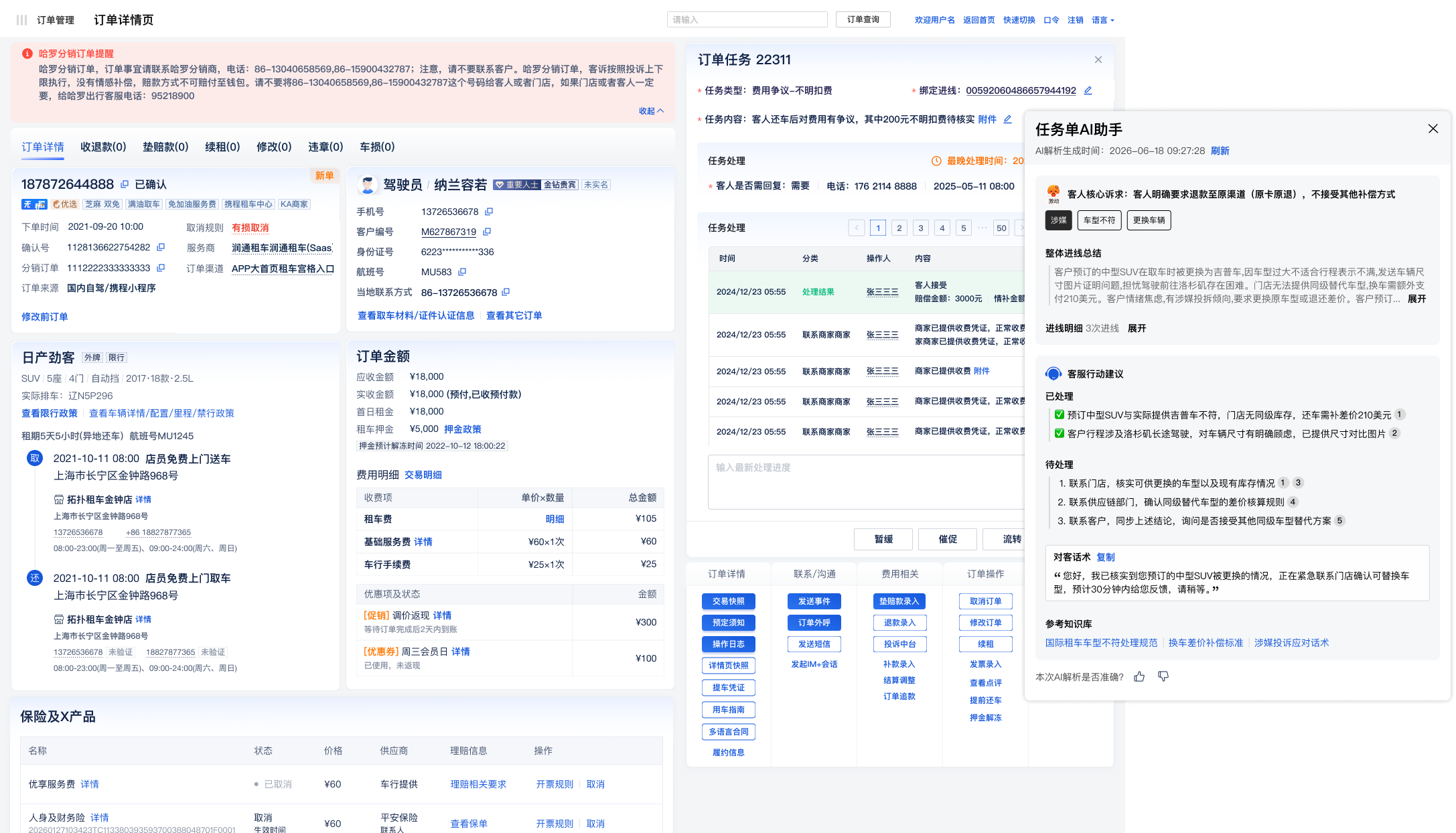
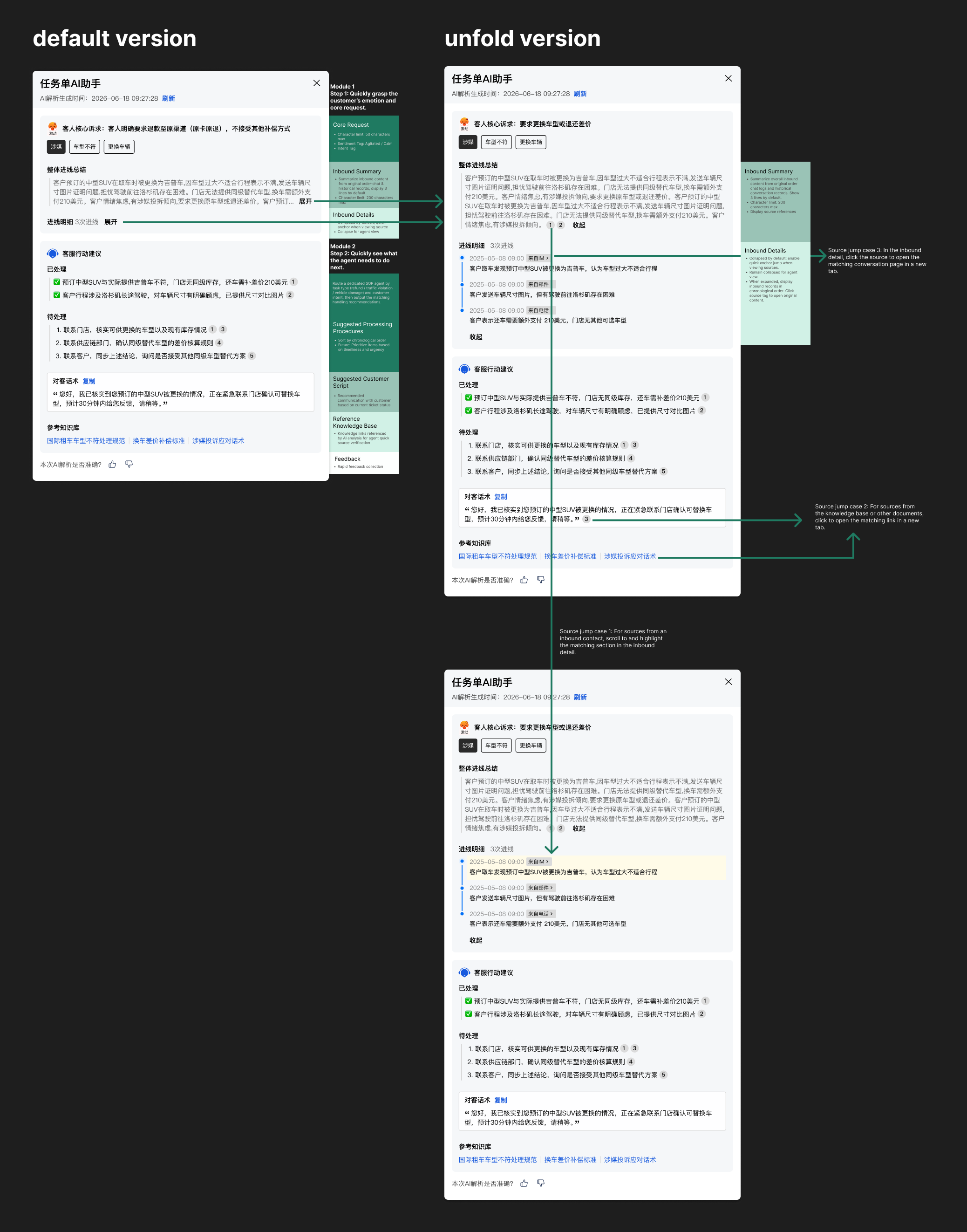
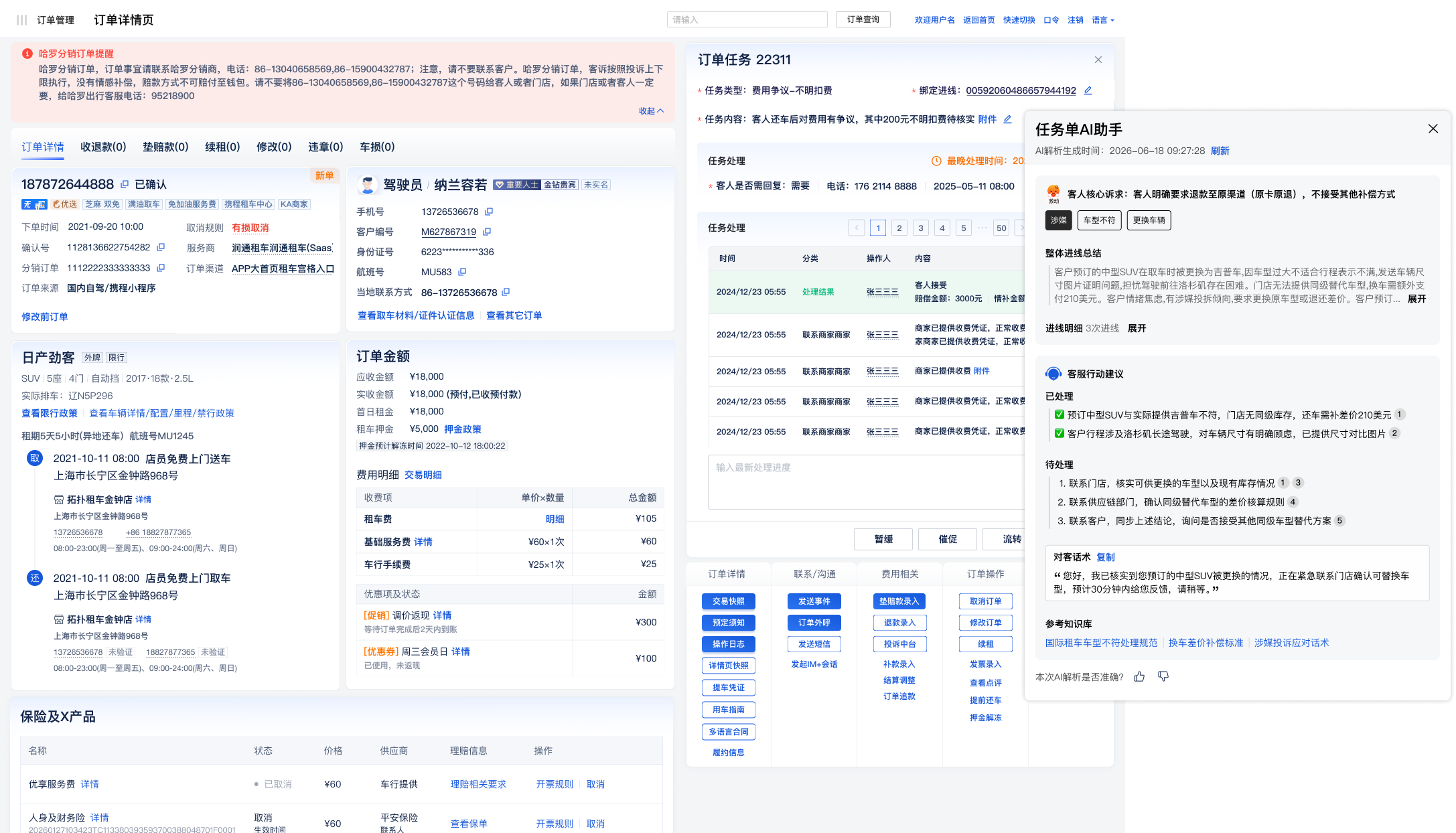
workspace in the primary view, with the assistant as a collapsible copilot panel
This side-by-side layout supports frequent cross-checking: agents can review orders and conversations while referring to summaries, timelines, and recommended next steps—without interrupting the main workflow. It positions the assistant as a reference tool, not a replacement.